
Why the Low Season Is Secretly the Best Time to Dive Raja Ampat
When most divers think about peak season in eastern Indonesia, they are drawn towards the dry months between October and May. However, there is breathtaking diving to be had in Raja Ampat even in the region’s windy, or low season. Some may see this season as a drawback, but June to August actually offers some of the richest, most atmospheric, and biodiverse diving of the year.
A Sheltered Paradise
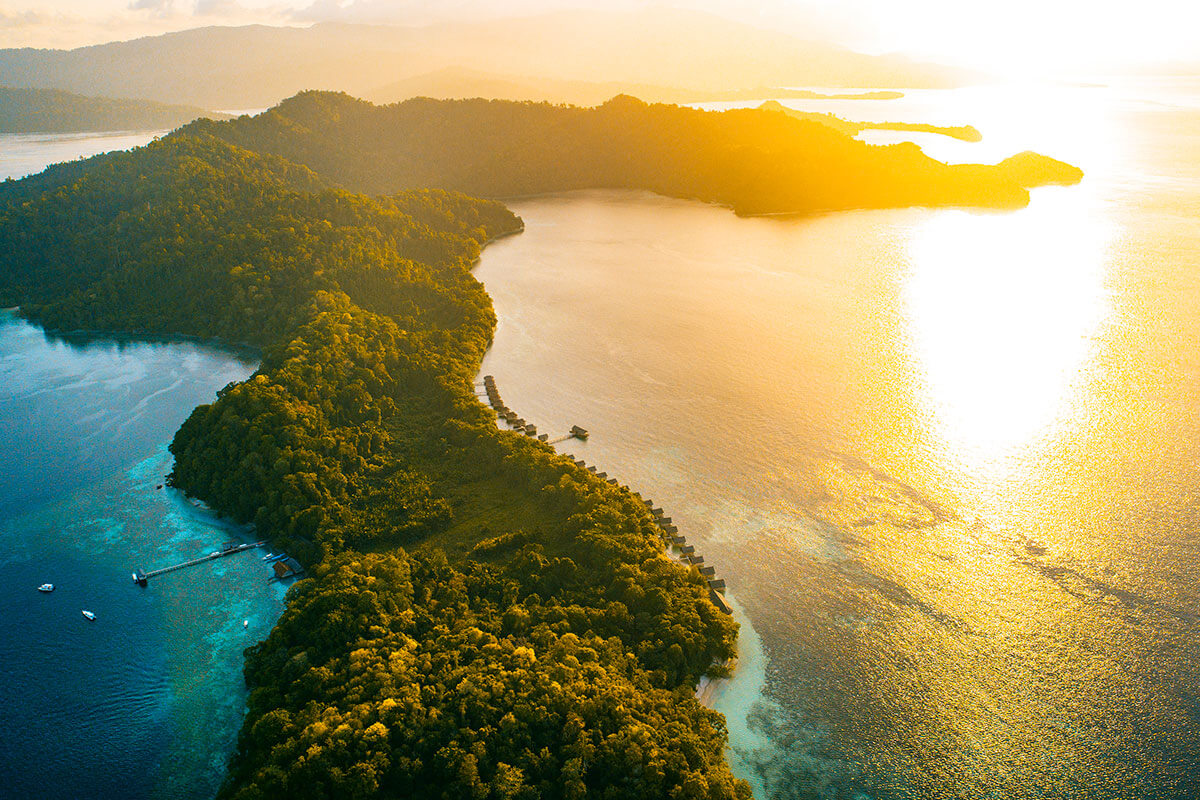
Papua Paradise Eco Resort is located on Birie Island, and benefits from being on the leeward side of the dominant wind direction. Other parts of Raja Ampat can suffer from higher winds and bigger swells, while Birie Island’s coastline stays protected. Currents are predictable and tide-driven, so there is very little worry of having to change dive plans last minute due to weather conditions.
Liveaboards tend to stay away from Raja Ampat at this time of year, but divers from Papua Paradise can still expect to visit all the amazing dive sites in the area that don’t necessitate open sea crossings. These shorter crossings between sites allow Papua Paradise’s dive crews to be flexible with dive itineraries without compromising quality.
Fewer Crowds, More Intimacy
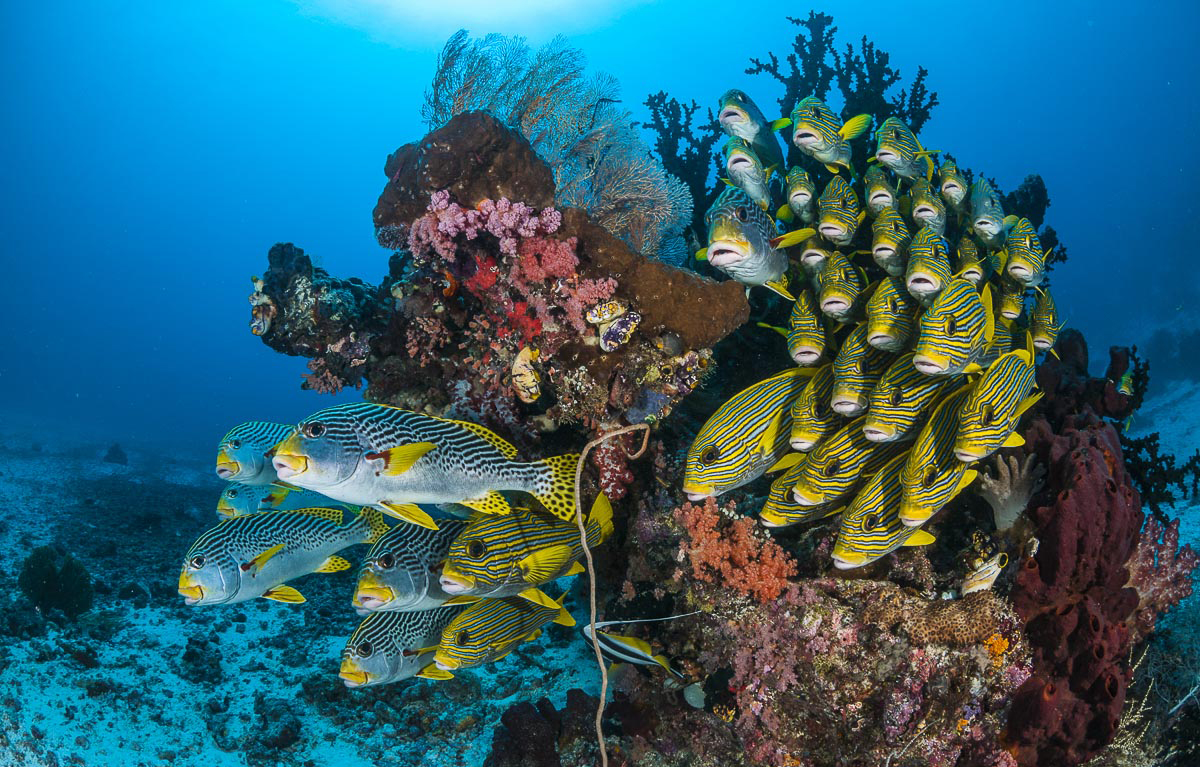
As June through August is considered low or off season in Raja Ampat, there are fewer liveaboards and fewer divers checked into resorts during these months. That translates into more space and intimacy when diving, which is something very special at world-class dive destinations.
Dive sites feel more private, there are less boats in the water and photographers can take their time to get the perfect shot. This also means marine life is more relaxed and behaves more naturally.
At Papua Paradise, small dive groups enhance the exclusivity of diving with more space and flexibility. It’s not uncommon to surface from a spectacular drift dive and realise there isn’t another boat in sight.
For seasoned divers who value serenity and unhurried underwater experiences, the low season offers a level of intimacy that peak months cannot always match.
Tropical Showers and Dramatic Skies
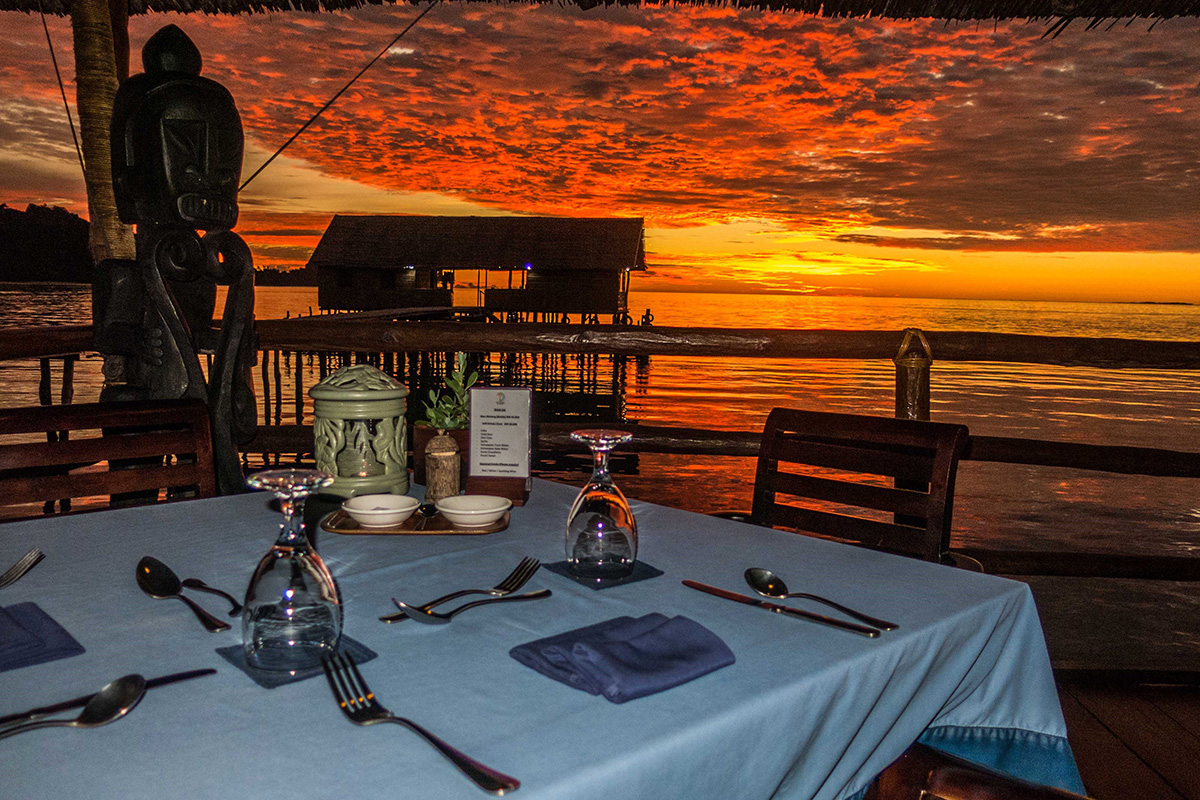
Rain in Raja Ampat rarely means relentless downpours. Showers often happen in short bursts, typically in passing downpours that quickly give way to calmer conditions.
In fact, most mornings during June, July, and August begin with glassy seas and still air. Dramatic cloud formations may build as the day goes on, and these moody skies are almost cinematic.
If rain does come in, it cools the air and brings in comfortable ocean breezes. The air temperature remains warm, and the water temperature never drops below around 27°C (80°F). The rain also has a beautiful way of connecting you to nature; there is a kind of romance in watching it from inside your overwater bungalow at Papua Paradise. You might find that rain doesn’t diminish Raja Ampat’s magic, but in fact makes it all the more special.
Water Means Life
Raja Ampat is nestled in the heart of the Coral Triangle, the most biodiverse marine region on Earth. The changes in weather in the windy season plays an incredibly important role in the ecology of the region, with rain feeding the lush rainforest of the islands that, in turn, releases nutrients into the sea. These nutrients fuel plankton blooms, feeding marine life and bringing many species into the area to feed.
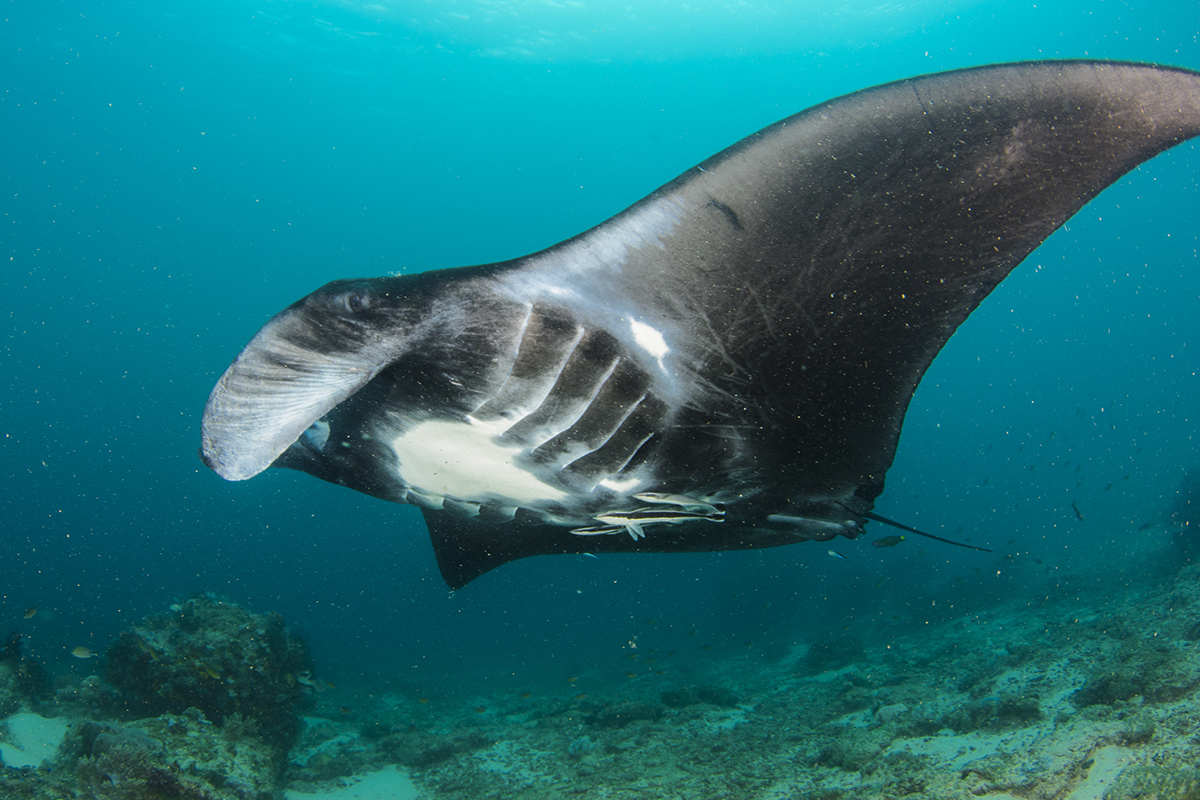
During June, July, and August, this nutrient-rich environment often means increased fish biomass and tons of reef activity. Divers have more frequent pelagic encounters and will find that there is exceptional macro life diversity. There is even a chance of seeing mantas, which are sometimes spotted during these months, even though it is outside the manta season in Raja Ampat.
Visibility holds at around 20-30 metres at dive sites frequented by Papua Paradise Eco Resort’s, except in strong tidal exchanges. Even then you can expect 15-25 meters, which is still excellent by global standards.
Macro Paradise in Bloom

The nutrient flows in Raja Ampat in the low season supercharge the entire food chain. Macro enthusiasts will find this time of year especially rewarding thanks to the numerous pygmy seahorses tucked into sea fans, technicolour nudibranchs grazing, the abundance of juvenile reef fish, elusive mandarin fish and weird and wonderful wobbegong sharks resting on the sea floor.
One benefit of the slightly softer light conditions that come with overcast days is the reduction of harsh shadows. Reef textures are more evenly illuminated, making underwater photography easier.
Papua Paradise’s dive guides are sharp-eyed and know just where to look for certain rare critters. And with fewer divers competing for subjects during these months, photographers are able to slow down, compose carefully, and get the shots they really want.
Thrilling Drift Dives
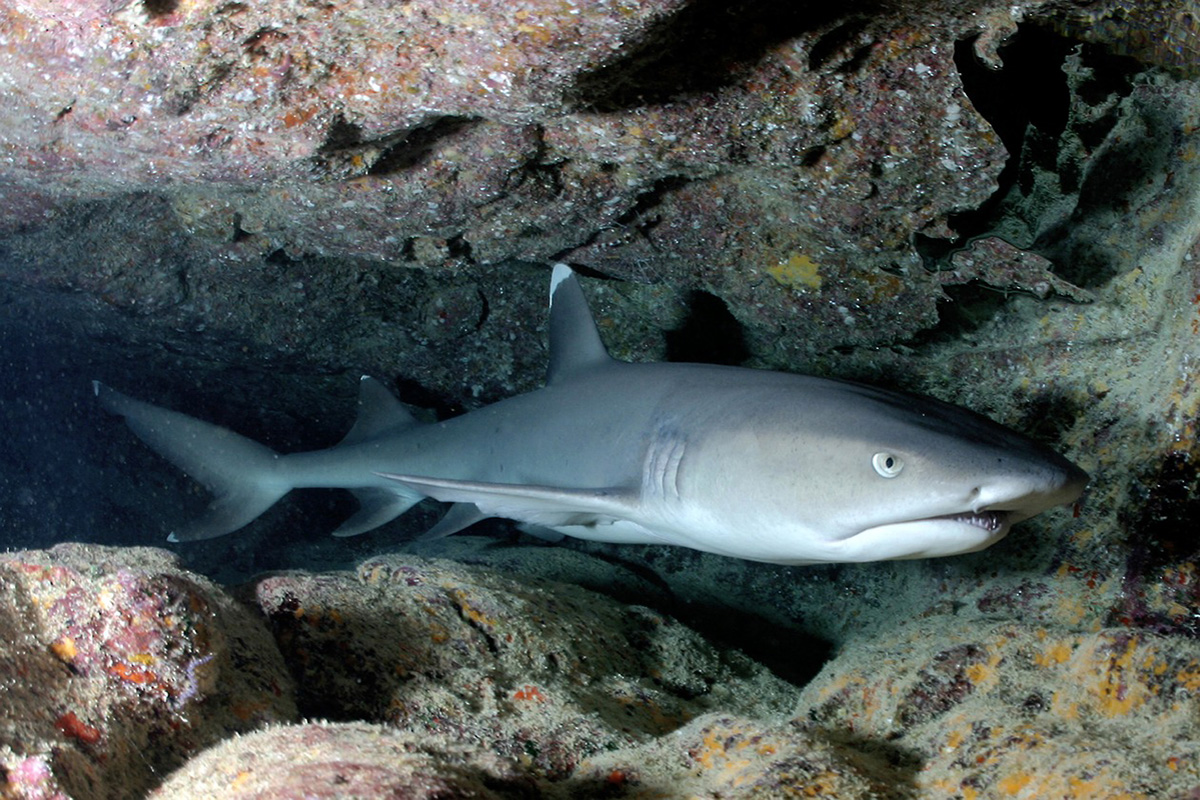
For nutrients to flow, currents must be relatively strong. This is why Raja Ampat’s biodiversity thrives. During the windy season, the stronger currents in the channels between islands fuel some of the most iconic drift dives. Cape Kri and Sardine Reef are two such dives, where you will see massive schools of fusiliers and trevally, barracuda tornadoes, and reef sharks patrolling coral gardens so dense they seem almost woven together.
For many divers, these thrilling drift dives are part of what makes windy season diving in Raja Ampat so unforgettable.
A Lush Landscape
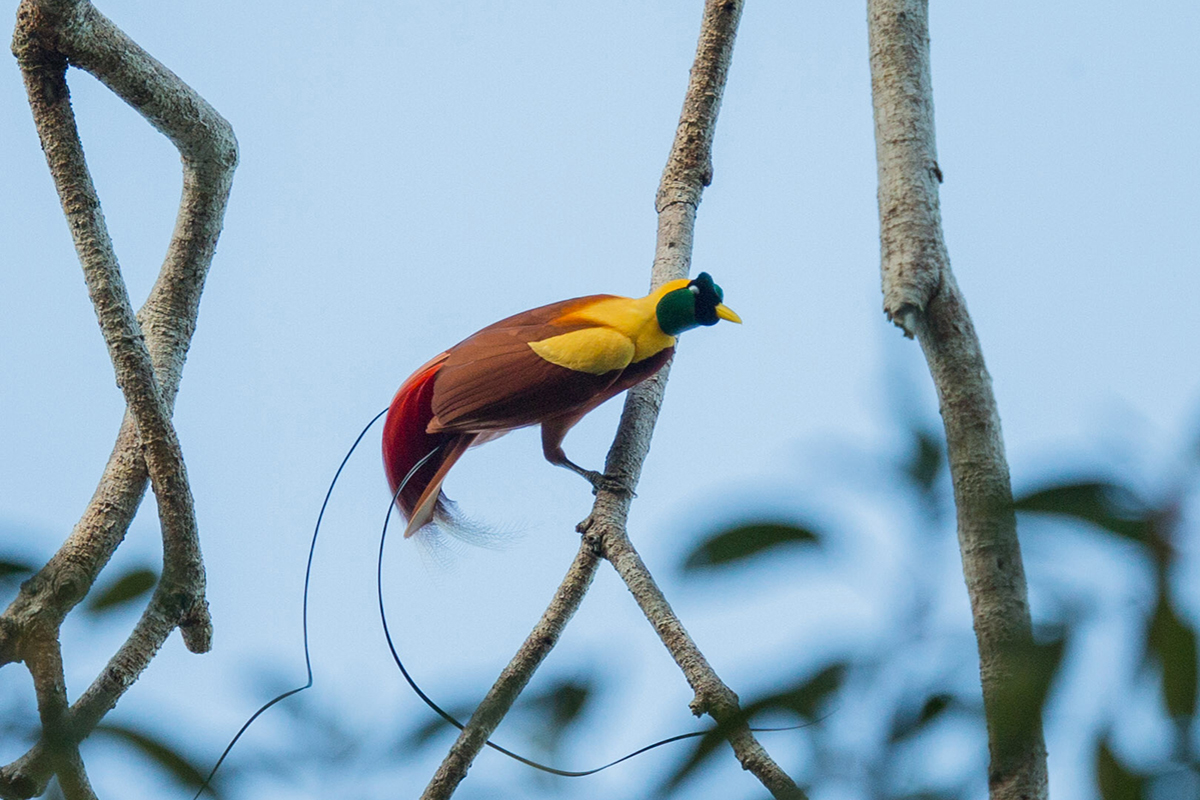
In this season it is not just the sea that is transformed, it also shows the islands of the Raja Ampat archipelago at its most lush and inviting. The jungle surrounding Papua Paradise is an intense verdant green during these months. Waterfalls run more energetically, and birdlife becomes more active. The entire ecosystem feels vibrant and alive.
Guests often combine birdwatching, visiting nearby villages, and hikes to waterfalls and viewpoints as part of their stay. Connecting with nature in such a remote place is one of the highlights of staying in Raja Ampat. The importance of switching off and enjoying the sounds, smells, and sights of this ancient land is a feeling that is a memory that will stick with you forever.
Raja Ampat’s ‘Off Season’ Magic

At Papua Paradise Eco Resort the low season is not an inconvenience; it actually shapes this incredibly biodiverse marine environment. Diving in June, July, and August in this region should never be overlooked. You could be missing out on critter-rich reefs, dramatic skies, and bustling rainforests full of life. Enjoy a wilder, greener Raja Ampat from Papua Paradise Eco Resort and experience not just a dive trip, but an immersion into a bustling marine environment at its very best.
